Fairlife Whole Milk vs Regular Milk: Is It Worth It? in 2026
Fairlife Whole Milk and regular whole milk may look similar at first, but they have some important nutritional and processing differences. Fairlife uses an ultra-filtration process, while traditional whole milk is generally sold in its standard form. This difference can affect protein, sugar, lactose, texture, and price.
So, is Fairlife Whole Milk worth paying extra for? The answer depends on what you value most in your milk.
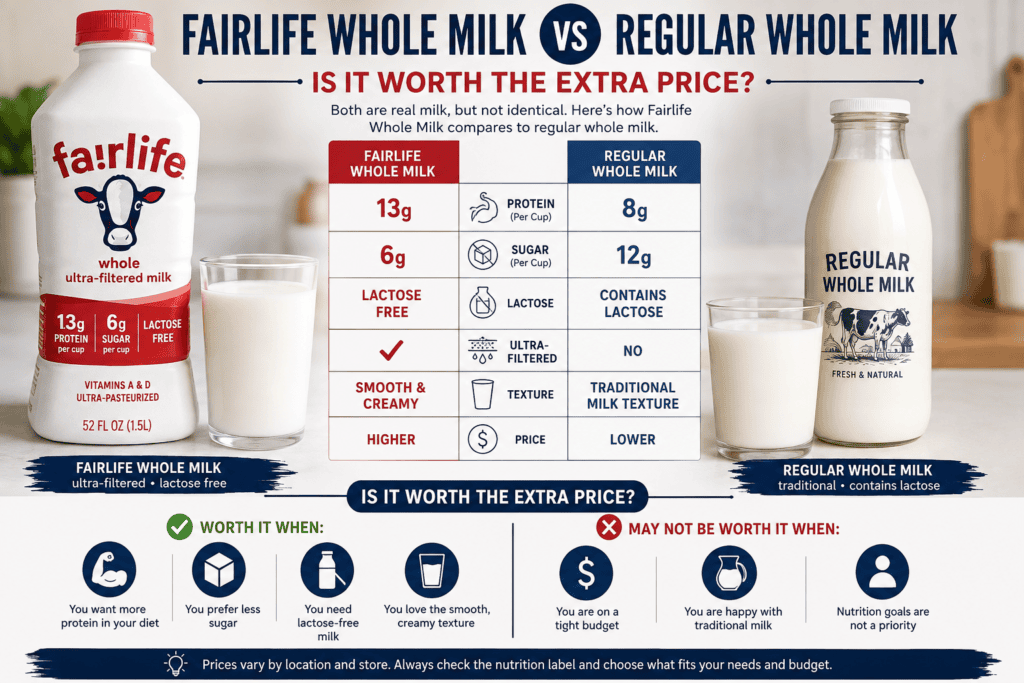
Fairlife Whole Milk vs. Regular Whole Milk
Fairlife Whole Milk and regular whole milk are both dairy options, but they differ in nutrition, processing, and price. Fairlife Whole Milk is ultra-filtered and provides more protein and less sugar per cup, while also being lactose-free.
Regular whole milk is usually more affordable and has the familiar traditional milk taste and texture. As the image shows, Fairlife may be worth the extra cost if you prefer higher protein, lower sugar, lactose-free milk, or a smooth and creamy texture. However, if price is your main concern and you are happy with regular milk, traditional whole milk can still be a practical everyday choice.
What Is Fairlife Whole Milk?
Fairlife Whole Milk is an ultra-filtered dairy milk. According to Fairlife, its whole milk provides 13g of protein and 6g of sugar per cup, while also being lactose-free.
The ultra-filtration process separates some components of milk and allows Fairlife to create a different nutritional profile from traditional milk. It also gives the milk a smooth and creamy texture that many people enjoy.
What Is Regular Whole Milk?
Regular whole milk is traditional cow’s milk that has not gone through the same ultra-filtration process used by Fairlife. A typical cup of whole milk contains around 8g of protein and 12g of naturally occurring sugar, although exact nutrition can vary by brand.
Whole milk is widely available and is often less expensive than Fairlife, making it a practical choice for everyday use.
| Feature | Fairlife Whole Milk | Regular Whole Milk |
|---|---|---|
| Protein | 13g per cup | Around 8g per cup |
| Sugar | 6g per cup | Around 12g per cup |
| Lactose | Lactose-free | Contains lactose |
| Processing | Ultra-filtered | Traditional dairy milk |
| Texture | Smooth and creamy | Traditional milk texture |
| Price | Usually higher | Usually lower |
Nutrition can vary between brands and products, so always check the current package label before making a direct comparison.
Protein Difference
One of the biggest reasons people choose Fairlife is its higher protein content. Fairlife Whole Milk provides 13g of protein per cup, compared with approximately 8g in many traditional whole milks.
That extra protein can make Fairlife appealing if you want to get more protein from the foods and drinks you already consume.
However, if protein isn’t a major concern for you, the additional cost may not feel necessary.
Sugar Difference
Fairlife Whole Milk also has less sugar than many traditional whole milk products. Fairlife lists 6g of total sugar per cup, while regular whole milk commonly contains around 12g.
The lower sugar content comes from the way Fairlife processes its milk rather than from simply removing sugar after production.
If you’re comparing milk products, remember to check total carbohydrates and total sugars on the nutrition label rather than relying only on the front of the package.
Is Fairlife Lactose-Free?
Yes, Fairlife Whole Milk is labeled lactose-free. This is another major difference between Fairlife and regular whole milk.
Traditional whole milk naturally contains lactose, while Fairlife uses a process that makes its milk lactose-free.
For people who prefer or need lactose-free dairy, this feature can be one of the biggest reasons to choose Fairlife despite the higher price.
What About Taste and Texture?
Taste is subjective, but Fairlife is known for having a smooth and creamy texture. Some people find it slightly richer or different from traditional whole milk.
Regular whole milk has the familiar dairy taste that many people already enjoy. If you’re happy with the taste and texture of regular whole milk, you may not notice enough of a difference to justify paying more.
The easiest way to decide is to try both and see which one you prefer.
Which Is Better for Coffee?
Both types of whole milk work well in coffee. Fairlife’s creamy texture can make it a good choice for coffee, especially if you prefer lactose-free milk.
Regular whole milk is also naturally creamy and is usually the more budget-friendly option.
If you drink coffee every day, the price difference can add up over time, so your choice may depend on whether the nutritional differences are important enough to you.
Is Fairlife Whole Milk Worth the Extra Price?
For some shoppers, yes. Fairlife can be worth the extra price if you specifically want:
- More protein per cup
- Less sugar than many regular whole milks
- Lactose-free dairy
- A smooth, creamy texture
- Ultra-filtered milk
On the other hand, regular whole milk may be the better value if you simply want affordable traditional dairy milk and don’t need those additional features.
Final Thoughts
Fairlife Whole Milk vs. Regular Whole Milk comes down to what matters most to you. Fairlife offers a different nutritional profile, more protein, less sugar, and lactose-free dairy, while regular whole milk is generally more affordable and widely available.
If those extra features are important to you, Fairlife may be worth the higher price. If you’re mainly looking for a simple and affordable whole milk, regular whole milk can still be an excellent everyday choice.
Before buying, compare the current nutrition label and price per serving to decide which one provides the better value for your needs.