Fairlife Milk Ingredients: Is It Good for Diabetics? in 2026
Fairlife milk has become a popular choice for people who want a milk option with more protein and less sugar than many traditional milk products. But if you are managing diabetes, you may wonder what is actually inside Fairlife milk and whether it can fit into a balanced eating plan.
The answer depends on the specific Fairlife variety, because different products can have different ingredients and nutrition facts. Looking at the ingredient list and nutrition label is the best way to understand what you are drinking.
Fairlife Milk Ingredients and a Diabetic Diet
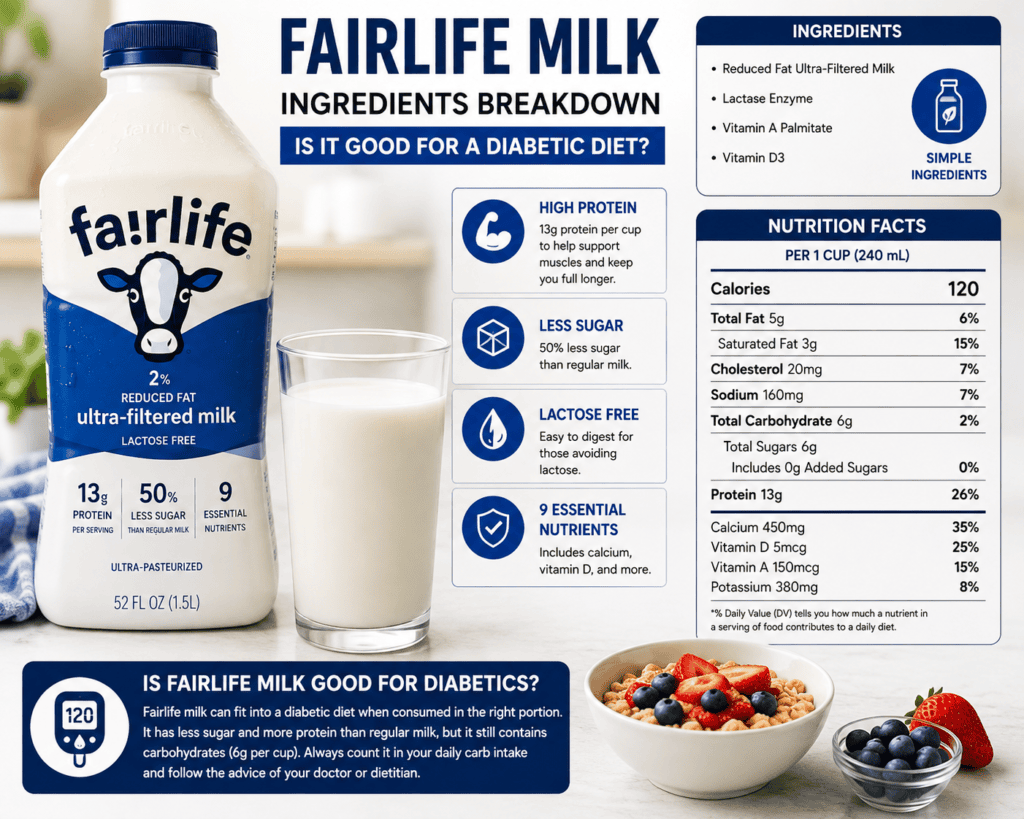
Fairlife milk contains a relatively simple list of ingredients, including ultra-filtered reduced-fat milk, lactase enzyme, vitamin A palmitate, and vitamin D3. Its 2% milk provides 13 grams of protein and 6 grams of carbohydrates per cup, with no added sugar listed.
The lactose-free formula can be useful for people who avoid lactose, while the higher protein content may help make the milk more filling. However, Fairlife milk still contains carbohydrates, so people managing diabetes should consider the serving size and include it in their overall daily carbohydrate intake.
What Ingredients Are in Fairlife Milk?
Fairlife’s 2% reduced-fat ultra-filtered milk contains reduced-fat ultra-filtered milk, lactase enzyme, vitamin A palmitate, and vitamin D3.
The ingredient list is relatively simple compared with many flavored milk products. The lactase enzyme is used to make the milk lactose-free, while vitamins A and D3 provide added nutrients.
Because Fairlife uses ultra-filtration, the milk has a different nutritional profile from many traditional milk products.
How Does Ultra-Filtration Work?
Ultra-filtration is one of the main things that makes Fairlife different. During this process, milk passes through specialized filters that separate some of its components.
This allows Fairlife to concentrate certain nutrients, such as protein, while reducing some of the sugar and lactose. The result is milk with a different balance of nutrients while still being dairy milk.
This processing is also one reason Fairlife can have a higher price than ordinary milk.
How Much Sugar Is in Fairlife Milk?
Fairlife’s 2% reduced-fat milk lists 6 grams of total sugar and 6 grams of total carbohydrate per cup. It also provides 13 grams of protein per serving.
For someone managing diabetes, the total carbohydrate amount is particularly useful to know. Milk naturally contains carbohydrates, so lactose-free milk should not automatically be considered carbohydrate-free.
It is also important to remember that flavored Fairlife products can have different amounts of sugar and carbohydrates. Always check the nutrition facts for the exact product you are buying.
Why Is Fairlife Higher in Protein?
One of the biggest attractions of Fairlife milk is its protein content. The company’s 2% milk provides 13 grams of protein per cup, compared with about 8 grams in regular milk.
The additional protein comes from the way the milk is processed and filtered.
For people who want to include more protein in their meals, this can be a useful feature. However, higher protein does not automatically make a food better for everyone with diabetes. The complete nutrition profile and serving size still matter.
Is Fairlife Milk Lactose-Free?
Yes, many Fairlife milk varieties are lactose-free. The lactase enzyme included in the product helps break down lactose.
This can make Fairlife appealing to people who want dairy milk but prefer to avoid lactose. However, lactose-free does not mean sugar-free or carbohydrate-free.
If you are monitoring carbohydrates, continue to check the total carbohydrate amount on the nutrition label.
Can Fairlife Milk Fit Into a Diabetic Diet?
Fairlife milk can fit into a balanced eating plan for some people with diabetes. The important thing is to consider the milk as part of your overall carbohydrate intake rather than treating it as a special diabetes product.
For example, a cup of Fairlife milk can be added to breakfast, coffee, oatmeal, or a smoothie. If you are already eating other carbohydrate-containing foods during the same meal, the milk’s carbohydrates should be considered as part of the total meal.
The American Diabetes Association emphasizes paying attention to carbohydrate portions and choosing foods that fit an individual’s overall meal plan.
What Should You Check Before Buying?
When choosing Fairlife milk, don’t focus only on the front of the bottle. Check the nutrition facts and ingredients.
Look at:
- Total carbohydrates
- Total sugars
- Protein
- Serving size
- Added sugars, when listed
- Calories
- The specific ingredients in that variety
This is especially important because Fairlife has several different milk and protein products, and their nutrition can vary.
Fairlife Milk vs. Regular Milk
Fairlife and regular milk are both dairy products, but their nutritional profiles can be different.
| Feature | Fairlife 2% Milk | Regular Whole/2% Milk |
|---|---|---|
| Processing | Ultra-filtered | Traditional |
| Protein | 13g per cup | Often around 8g |
| Sugar | 6g per cup | Often higher |
| Lactose | Lactose-free | Usually contains lactose |
| Price | Usually higher | Usually lower |
Exact nutrition varies by brand and milk variety, so use the current package label when making a direct comparison.
Is Fairlife Milk a Good Choice for Everyone With Diabetes?
Not necessarily. There is no single milk that is automatically best for every person with diabetes.
Some people may appreciate Fairlife because it provides more protein and less sugar than many traditional milk options. Others may prefer regular milk because it is less expensive and already fits comfortably into their eating plan.
Your individual carbohydrate needs and overall diet are more important than choosing a particular brand.
Final Verdict
Fairlife milk can fit into a balanced diabetic diet for many people, but it should not be considered a special diabetes-friendly product. Its 2% reduced-fat variety provides 13 grams of protein and 6 grams of carbohydrates per cup, while its lactose-free formulation may be useful for people who prefer lactose-free dairy.The most important thing is to check the specific Fairlife product’s ingredients, carbohydrates, sugar, protein, and serving size. If you are managing diabetes, consider how the milk fits into your complete meal rather than looking at one nutrient alone.