Can Diabetics Drink Fairlife Milk? Nutrition & Sugar Guide in 2026
Fairlife milk can be an option for some people with diabetes, but it is important to look at the nutrition facts, carbohydrate content, sugar, and serving size of the specific Fairlife product. Fairlife offers several varieties, and their nutritional values are not all the same. So, rather than assuming that every Fairlife product is suitable, it is better to compare the label and consider how the milk fits into your overall eating plan.
Fairlife Milk: A Smart Choice for Your Diet
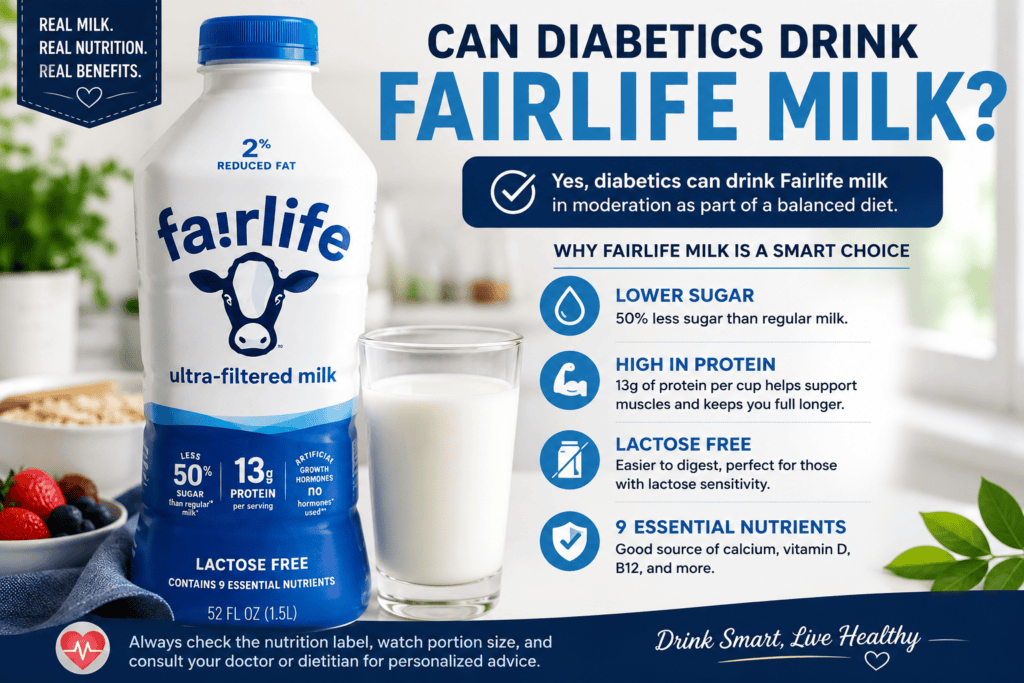
Fairlife milk is an ultra-filtered milk option that offers a combination of protein, lower sugar, and essential nutrients. The image highlights that Fairlife milk is lactose-free and provides 13g of protein per cup
along with nutrients such as calcium, vitamin D, and vitamin B12. With less sugar than regular milk, it can be a convenient choice for people who want to include milk in their daily diet. However, nutritional needs are different for everyone, so it is always a good idea to check the nutrition label and choose the variety that best fits your diet.
What Makes Fairlife Milk Different?
Fairlife uses an ultra-filtration process to create its milk products. Many of its milk varieties are also lactose-free. The company states that its 2% reduced-fat ultra-filtered milk contains 13g of protein and 6g of total carbohydrates per cup.
The higher protein content can make Fairlife interesting for people who want a milk option that provides more protein per serving. However, protein content alone does not determine whether a food is appropriate for someone managing diabetes.
Is Fairlife Milk Low in Sugar?
Some Fairlife milk varieties contain less sugar than traditional milk. For example, Fairlife 2% reduced-fat milk lists 6g of total sugar per cup. However, different varieties can have different amounts.
Chocolate Fairlife milk, for example, has a higher carbohydrate and sugar content than the plain 2% variety. This is an important reason to check the nutrition label before choosing a product.
If you are trying to manage your carbohydrate intake, plain or lower-sugar varieties may be easier to include in your meal plan than sweetened flavored versions.
Does Lactose-Free Mean No Carbohydrates?
No. This is an important point.
Fairlife milk can be lactose-free while still containing carbohydrates. Lactose is the natural sugar found in milk, and lactose-free products are processed so that lactose is broken down. This does not mean that the product has zero carbohydrates.
For example, Fairlife 2% milk lists 6g of total carbohydrates per cup even though it is lactose-free.
Therefore, people who count carbohydrates should look at the total carbohydrate line on the nutrition facts label.
What About Fairlife Protein Shakes?
Fairlife also makes protein shakes, which are different from its regular milk products. Protein shakes can contain different amounts of carbohydrates, sugars, calories, and protein depending on the variety.
If you are considering a Fairlife protein shake, don’t use the nutrition information from Fairlife milk to judge the shake. Instead, check the label of the exact shake you plan to drink.
This is especially important for flavored products because added ingredients can change the carbohydrate and sugar content.
How Much Fairlife Milk Can You Drink?
There isn’t one serving size that is right for every person with diabetes. Your individual carbohydrate needs, medications, activity level, and overall eating pattern can all affect how a particular food fits into your diet.
A practical approach is to start with the serving size listed on the package and consider its carbohydrate content as part of your meal or snack.
For example, if you add Fairlife milk to coffee, cereal, or a smoothie, remember that the milk contributes carbohydrates to the overall meal.
Ways to Use Fairlife Milk
Fairlife milk can be used in many everyday foods and drinks. You can:
- Add it to coffee or tea
- Pour it over cereal
- Blend it into a smoothie
- Use it in oatmeal
- Drink it chilled
- Use it in cooking and baking
When using milk in recipes, remember to consider the total carbohydrates from the other ingredients as well.
What Should You Check on the Label?
When choosing a Fairlife product, pay attention to these nutrition facts:
1. Total carbohydrates: This is particularly important when monitoring carbohydrate intake.
2. Total sugars: Check how much sugar is in each serving.
3. Added sugars: Flavored products may contain added sugar.
4. Protein: Fairlife products can provide a relatively high amount of protein compared with some traditional milk options.
5. Serving size: Drinking more than one serving also means consuming more of the listed nutrients.
Comparing these details can help you choose a product that better matches your personal eating plan.
Fairlife Milk vs. Regular Milk
One reason people choose Fairlife is its different nutritional profile. Fairlife’s 2% reduced-fat milk provides 13g of protein per cup, while the company notes that regular milk generally provides around 8g per cup.
Fairlife is also lactose-free, which can be useful for people who prefer lactose-free dairy products.
However, regular milk and Fairlife milk can both contain carbohydrates. The best choice depends on your nutritional preferences and individual dietary needs rather than simply choosing one brand over another.
Final Thoughts
So, can diabetics drink Fairlife milk? Fairlife milk can fit into the eating plan of many people with diabetes, but it is important to choose the right variety and pay attention to carbohydrates, sugars, serving size, and overall nutrition.
Plain Fairlife milk may be a useful option for someone looking for lactose-free dairy with more protein, while flavored varieties should be checked carefully for their sugar and carbohydrate content.
Most importantly, there is no single milk choice that is best for everyone with diabetes. If you have diabetes and are unsure how Fairlife milk fits into your individual meal plan, discuss your specific needs with your doctor or a registered dietitian.